.svg)



Can I Store a Car in a Self-Storage Unit? Pros, Cons and When a Specialist Is Better



What self-storage units are good at
- Space & price flexibility: month-to-month, local availability; drive-up units are convenient.
- Basic security: gated sites with CCTV and access hours (but usually not tailored to supercars).
- Clear rules: size lists, access windows, unit types (containers vs indoor units).
Checklist before you book, make sure you know: unit dimensions, access hours, whether vehicle storage is permitted, proof of insurance, fluids/fuel rules.
The drawbacks most owners only discover later
- No humidity control - condensation, mould, corrosion risk; winter amplifies this.
- Power & battery care often not provided or not permitted (tenders running continuously).
- Access hours - no true 24/7 at many sites; gate times apply.
- Lease & zoning rules can restrict “parking/working on vehicles” (varies by site; check fine print).
- Handling & clearance: no splitter-safe ramps, no trained handlers for wide/low cars.
- Privacy & movement logs: typically none; not ideal for high-profile vehicles.
When a self-storage unit is fine
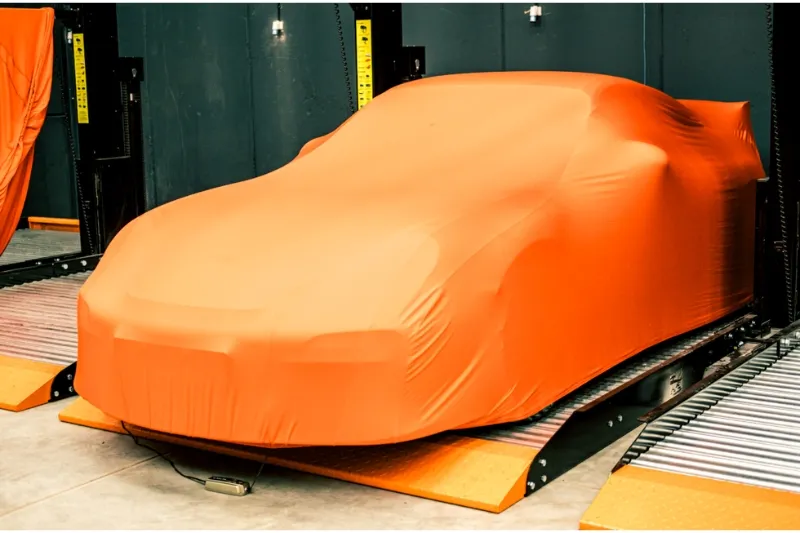
- Short-term parking for a regular car, fully insured and roadworthy, where humidity isn’t a concern and you accept fixed gate hours.
- You need an interim solution before moving to a specialist.
Checklist: confirm vehicle permission in lease, measure interior dimensions, ask about power and ventilation, confirm access hours, require hard floor, bring breathable cover.
When a specialist facility is the smarter choice
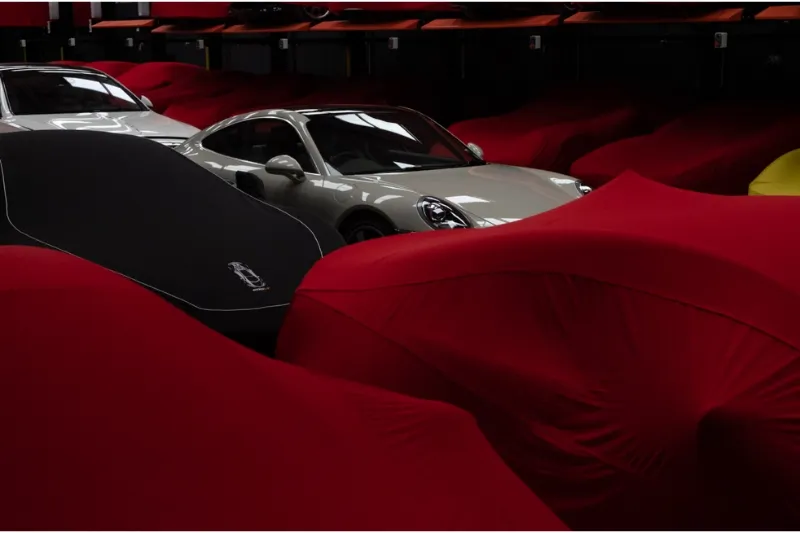
- Supercars/low-clearance (splitters, wide tyres, carbon-ceramics).
- Rarely used/seasonal cars (battery maintenance + humidity control).
- Winter lay-ups (avoid cold/damp garages & salty returns).
- Privacy/security demands (Faraday key storage, movement logs).
See our Supercar Storage · Dehumidified Car Storage.
Winter considerations (unit vs specialist)
- Condensation in cold units vs dehumidified bays.
- Batteries: can you legally/safely run a maintainer in the unit?
- Salt: do you have facilities to rinse/dry before parking up?
- Tyres: can you maintain pressures/movement; consider tyre cushions for long lay-ups.

FAQs
Will a storage unit damage my car over winter?
Short answer: It can.
Most self-storage units are cold and damp with no humidity control or safe power for a maintainer. That combo leads to condensation, mould, corrosion and flat batteries.
Safe option: a dehumidified bay with a smart battery conditioner and proper prep (clean, dry, tyre care).
Can I run a battery conditioner in a storage unit?
Short answer: Usually no.
Many leases forbid continuous power or using electricals in the unit. If power is allowed, it’s often unreliable and not monitored.
Safer route: use a specialist facility that supplies PAT-tested conditioners and records connections.
Are self-storage units climate-controlled in the UK?
Short answer: Rarely.
“Dry” or “secure” in marketing ≠ humidity control. Most units are just unheated spaces.
What you want: a dehumidified environment (stable RH) so metal, leather and electronics don’t suffer over winter.
What insurance do I need?
Short answer: Keep your own cover in place.
Self-storage sites typically require road or laid-up insurance and proof of ownership; they don’t insure your car.
With specialists: we provide storage documentation (security, access, processes) to support your insurer.
What about access at short notice?
Short answer: Expect limits in self-storage.
You’re tied to gate hours and staff availability.
With specialists: you get bookable access, including discrete out-of-hours by arrangement, plus movement logs so you know who handled the car and when.